
Why Plane Turbulence Is Getting Worse—and How Science Is Fighting Back
The calm hum of a transatlantic flight is shattered. Trays rattle, coffee spills, and passengers are jolted in their seats. For Andrew Davies, a 2024 flight from London to Singapore turned into a harrowing ordeal: "It felt like a rollercoaster on steroids. We dropped so fast my iPad flew into my face." His experience isn’t unique. As climate change reshapes our atmosphere, turbulence—the invisible enemy of air travel—is becoming more frequent and severe, threatening both passenger safety and the aviation industry’s bottom line. But scientists and engineers are deploying cutting-edge tools to turn the tide.
Turbulence isn’t a random act of nature—it’s a symptom of atmospheric chaos. There are three primary types: convective (from thunderstorms), orographic (from mountain winds), and clear-air (invisible shifts in jet streams). While all three are intensifying, clear-air turbulence is the most insidious. As Professor Paul Williams of the University of Reading warns, "We could see a tripling of severe turbulence by mid-century. Every 10 minutes of turbulence today might become 30 minutes."
Climate change is the accelerant. Warmer air holds more moisture, supercharging thunderstorms into violent tempests. Over the North Atlantic, severe turbulence has surged 55% since 1980. Meanwhile, the jet stream—a river of wind 6 miles high—is strengthening as polar regions warm faster than the equator. This "thermal tug-of-war" creates sharper wind gradients, generating invisible turbulence that can toss planes like leaves in a gale.
The consequences are stark. In 2023, 40% of passenger injuries on global flights were turbulence-related. While fatalities remain rare (fewer than five since 1981), the economic toll is staggering: Airlines spend £180,000 to £1.5 million annually per carrier on repairs, delays, and compensation. Worse, rerouting around storms burned 19,000 extra tonnes of fuel in 2019 alone, exacerbating carbon footprints.
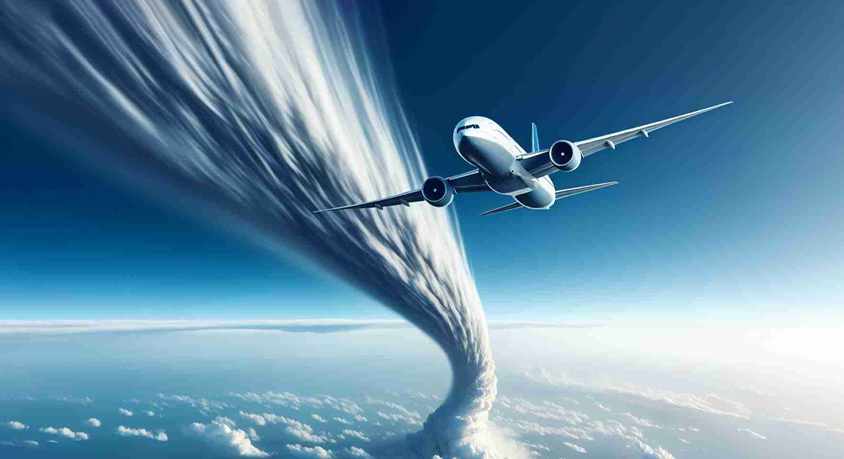
Airlines aren’t just weathering the storm—they’re fighting back with innovation.
Gone are the days of relying solely on pilot intuition. Modern aircraft use EDR (Eddy Dissipation Rate) algorithms to map turbulence in real time. Systems combine satellite data and flight reports to create "risk cloud maps," alerting crews to turbulence hotspots with 90% accuracy. Southwest Airlines now ends cabin service at 18,000 feet instead of 10,000 feet, cutting injuries by 20% by ensuring passengers stay belted during critical descent phases.
Aircraft designers are reimagining materials. The Boeing 787’s carbon-fiber wings flex 25 degrees upward under stress—more than enough to absorb turbulence shocks without snapping. Inspired by barn owls, engineers are testing hinged-wing designs that mimic nature’s shock absorbers. A 2020 Royal Society study found these bio-inspired wings could reduce gust impacts by 40% in small aircraft. Meanwhile, start-ups like Austria’s Turbulence Solutions are developing active cancellation systems, using sensors to detect turbulence and adjust wing flaps in milliseconds.
Airlines are rewriting flight paths to avoid trouble. Some carriers use AI-powered models to reroute planes around turbulent zones, saving 167 meters of runway distance during takeoffs while reducing crew workload by 50%. Over the North Atlantic, real-time data-sharing between pilots and air traffic controllers now allows dynamic altitude adjustments, shaving minutes off delays while minimizing turbulence exposure.
For passengers, the solution is deceptively simple: Stay buckled. The International Civil Aviation Organization reports that 90% of turbulence injuries occur when seatbelts are unfastened. Yet, many still ignore warnings. "I’ve seen people line up for the bathroom during thunderstorms," says Captain Nathan Davies. "It’s like playing roulette with gravity."
Airlines are innovating here too. Korean Air replaced hot noodle servings with pre-packaged meals after turbulence-related burns doubled post-2019. Meanwhile, smart cabin belts with haptic feedback are being tested—vibrating when turbulence is imminent. For nervous flyers, virtual reality apps like "Calm Skies" offer desensitization training, simulating turbulence scenarios to reduce anxiety.
As turbulence intensifies, the aviation industry faces a dual challenge: improving safety while cutting emissions. Diverting flights to avoid turbulence adds 1-2% to global aviation’s carbon output. But next-gen technologies offer hope. Millimeter-wave radar can detect clear-air turbulence up to 100 miles ahead, enabling more precise routing. Meanwhile, reconfigurable intelligent surfaces (RIS)—thin panels that bounce signals around obstacles—are being tested to enhance communication in turbulent zones, reducing reliance on fuel-guzzling reroutes.
For Andrew Davies, the lesson is clear: "Turbulence isn’t just a nuisance—it’s a wake-up call." While climate change is accelerating the problem, science is rising to meet it. From predictive algorithms to bio-inspired wings, the future of flight may be bumpy, but it’s far from hopeless. As engineers refine their tools, one truth remains: In the sky, as on the ground, adaptability is our greatest ally.
MORE FROM WIRED

- WordPress as Your Marketing Brain: Use REST API to Connect Every Tool

- AI-Driven Real-Time Personalization: Render Unique Website Content for Every Visitor

- Ditch GA4 Bloat: Build Privacy-First Tracking with Plausible + Google Ads
- Nov,05,2025

- Embrace Firefox: Its Privacy Features Are Your Website’s New Performance Test
- Oct,20,2025

- Cut Choices, Boost Conversions Fast
- Oct,16,2025

- Edge Computing: Instant Global Site Loads
- Oct,13,2025

- Top WordPress Plugins to Boost Conversions
- Oct,09,2025